
3PL WMS for Qatar Fulfillment Operations
Warehouse Management Software for Qatar 3PLs
Manage imported inventory, multi-client stock, and local order fulfillment from one warehouse management system.
Fulfillor helps 3PLs in Qatar receive inbound goods, maintain client-level inventory separation, and coordinate picking, packing, and dispatch with accurate warehouse visibility.
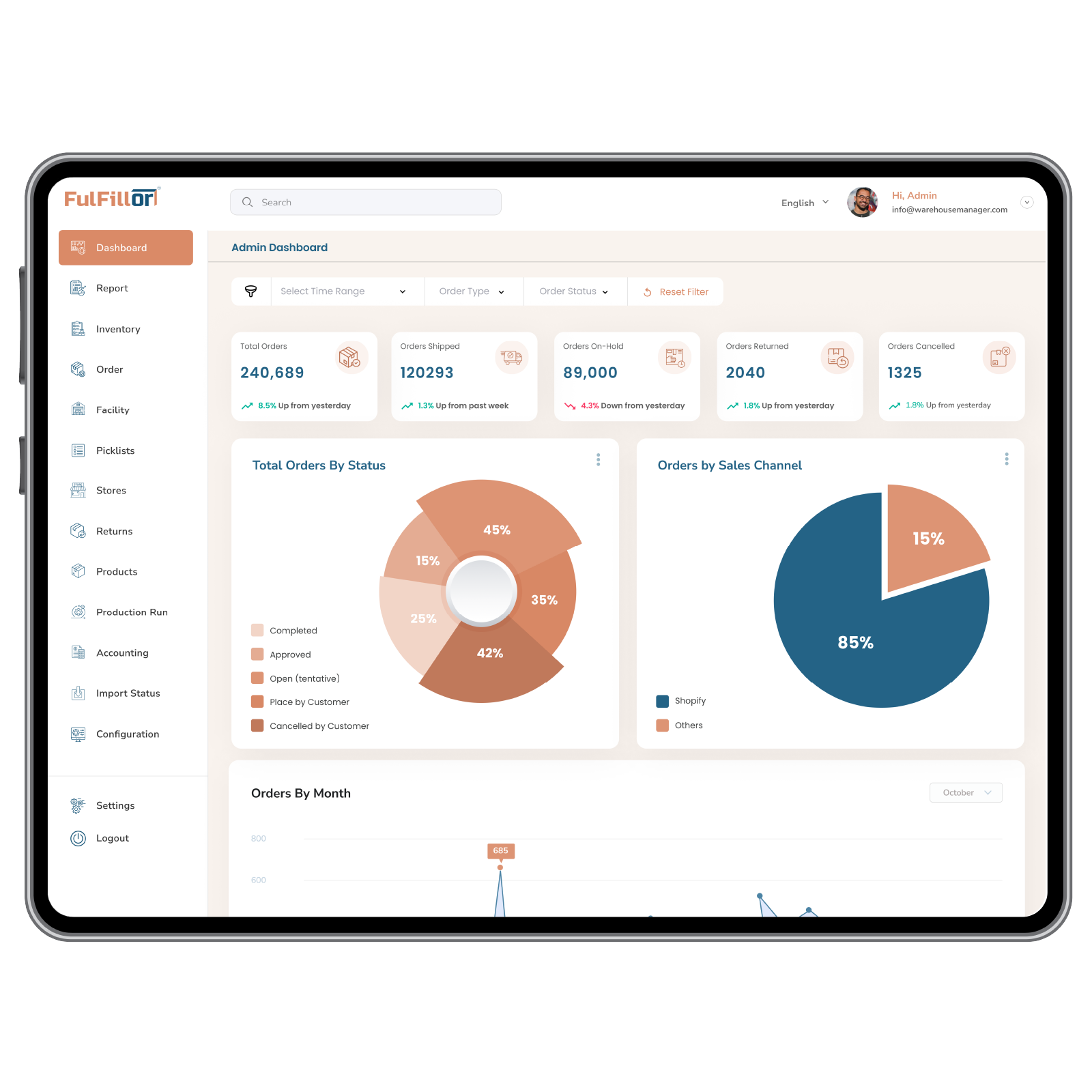
Managing Import-Led 3PL Warehouse Operations in Qatar
Qatar-based 3PLs often receive imported inventory through Hamad Port or Hamad International Airport before stock moves into local warehouses and fulfillment networks. For operators serving multiple clients, inbound volume can quickly create pressure on receiving, putaway, inventory allocation, stock ownership, and dispatch.
How Fulfillor Supports Qatar 3PL Operations
- Maintain inventory visibility by client, SKU, batch, and storage location.
- Keep imported inventory separated during receiving, putaway, picking, and dispatch.
- Prioritize urgent local orders while maintaining client-specific fulfillment workflows.
- Add warehouse locations and users as Qatar fulfillment volumes grow.
Built for Import-Led 3PL Operations in Qatar

Separate Client Inventory During Import & Fulfillment

Inventory Visibility by Client, Batch & Location

Import-to-Domestic Fulfillment Workflows

Priority Picking & Dispatch Workflows
Scale From One Qatar Warehouse to Multi-Site 3PL Operations
Fulfillor supports single-site warehouse operations as well as growing 3PL networks managing inventory and fulfillment across multiple Qatar locations.
Teams can add warehouse locations, users, clients, and operational workflows while maintaining centralized inventory visibility and consistent warehouse processes.
For operations based in Doha or connected to logistics areas around Hamad Port, Hamad International Airport, or Qatar Free Zones, Fulfillor can help teams manage multiple facilities without separating inventory and order workflows across disconnected systems.
Existing ecommerce, carrier, accounting, and business systems can remain connected as warehouse operations expand.
Who This Is For
Multi-client 3PL providers managing inventory and orders in Qatar
Fulfillment warehouses serving Qatar ecommerce and retail businesses
Warehouses handling imported goods for local storage and distribution
Logistics operators managing one or more warehouse locations across Qatar
Connect Qatar Fulfillment Operations With Existing Systems
Connect ecommerce platforms, accounting systems, carriers, and business tools used across your fulfillment operation.























Integration availability depends on the platform, carrier account, API access, and required warehouse workflow.
See How Fulfillor Fits Your Qatar 3PL Operation
Manage imported inventory, multi-client stock, and local dispatch with clearer warehouse visibility.
Frequently Asked Questions
Yes. Fulfillor can help warehouse teams manage receiving, putaway, stock allocation, picking, and dispatch for imported inventory while keeping stock separated by client, SKU, batch, and storage location.
Yes. Fulfillor allows 3PL operators to separate inventory, orders, permissions, billing rules, and reporting by client while managing all warehouse activity through one centralized WMS.
Fulfillor supports integrations with regional and international carriers, including supported workflows with services such as QPost, Aramex, DHL, and FedEx. Availability depends on the carrier account, API access, and required shipping workflow.
Yes. Fulfillor can manage inventory and fulfillment workflows across multiple warehouse locations while maintaining centralized visibility by facility, client, SKU, and storage location.
Yes. Fulfillor can support warehouse execution for domestic Qatar orders and GCC-bound shipments, including inventory allocation, picking, packing, carrier processing, and shipment tracking through supported integrations.
Yes. Fulfillor supports integrations with ecommerce platforms and business systems so orders, inventory updates, fulfillment status, and shipping data can move through connected warehouse workflows.