
3PL Inventory Management Software for Multi-Client Warehouses
Manage inventory across multiple clients, warehouses, SKUs, sales channels, and fulfillment workflows from one system. Fulfillor's 3PL inventory management software helps reduce stock mismatches, improve inventory visibility, automate updates, and support accurate fulfillment at scale.
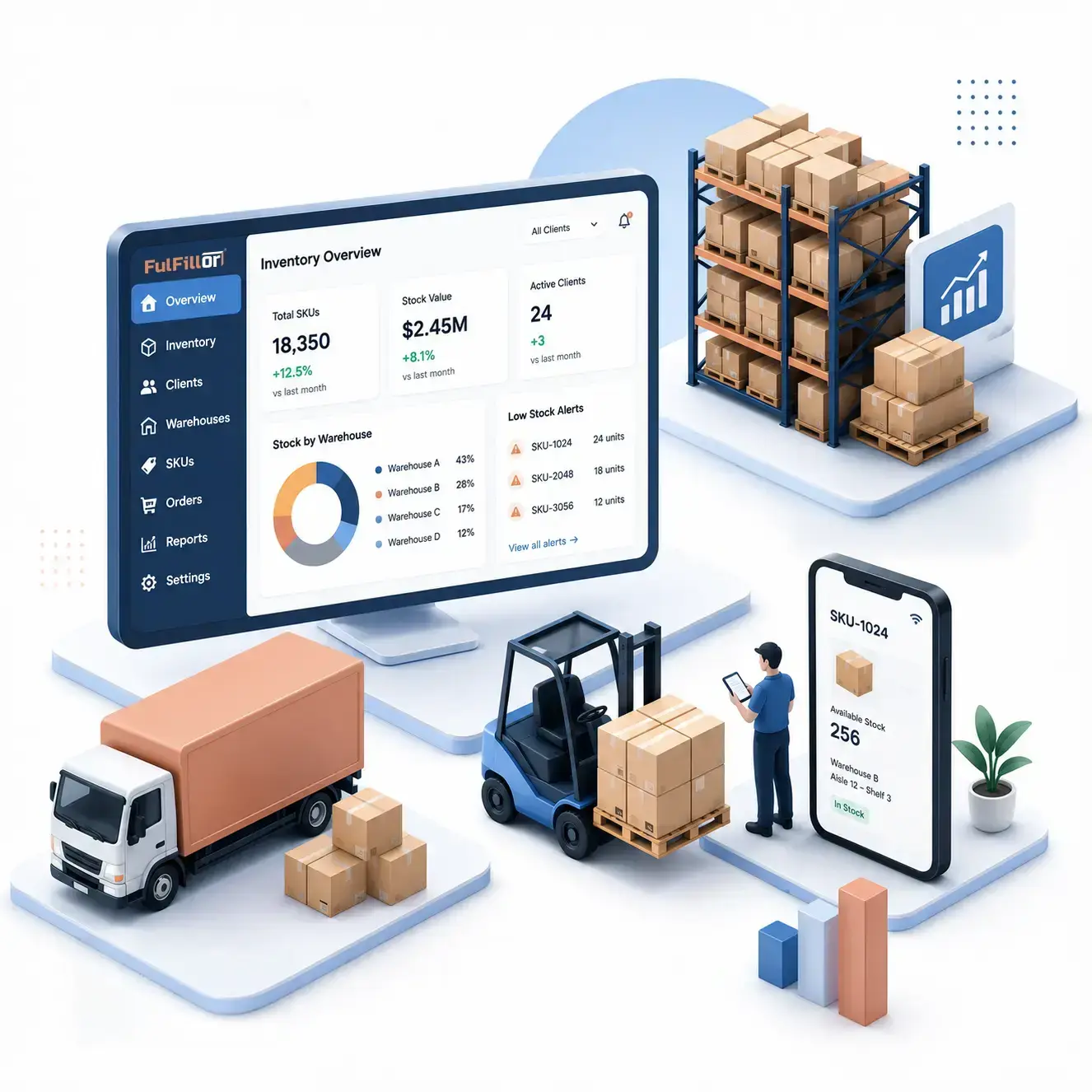 Multi-client stock controlReal-time SKU visibility
Centralized Inventory Control Across Every Client and Warehouse
3PL inventory management software helps fulfillment providers track stock across multiple clients, warehouses, SKUs, bins, and sales channels from one connected system. It supports real-time inventory updates, receiving, picking, shipping, returns, transfers, cycle counts, and client-level reporting.
What the system helps control
Why 3PL Warehouses Need Advanced Inventory Management?
Catch Inventory Discrepancies Before Fulfillment: Use real-time stock updates and location-level tracking to identify mismatches, reduce manual checks, and prevent inventory errors from affecting fulfillment.
Centralized Inventory Control: Connect ecommerce platforms, marketplaces, ERP, and WMS systems through automated inventory syncing. Keep inventory data consistent across channels and improve replenishment planning.
Batch, Lot, and Expiry Tracking: Track batch numbers, lot codes, serial items, and expiry dates from receiving to dispatch. This helps improve traceability, reduce waste, and give clients clearer visibility into inventory movement.
Kit and Component Inventory Tracking: Track finished kit SKUs and component-level stock so warehouses can manage bundles, kitting workflows, and shared inventory without overselling.
Trusted by 3PL providers handling multi-warehouse inventory operations.

Trusted by 3PL Teams Managing Inventory Across Clients
100+
3PL & Fulfillment Clients
Support complex warehouse operations across multiple clients.
80+
Retail Brands Supported
Help retail businesses move from order intake to fulfillment.
150+
Ecommerce, Shipping & Warehouse Integrations
Connect ecommerce, shipping, and warehouse operations without manual work.
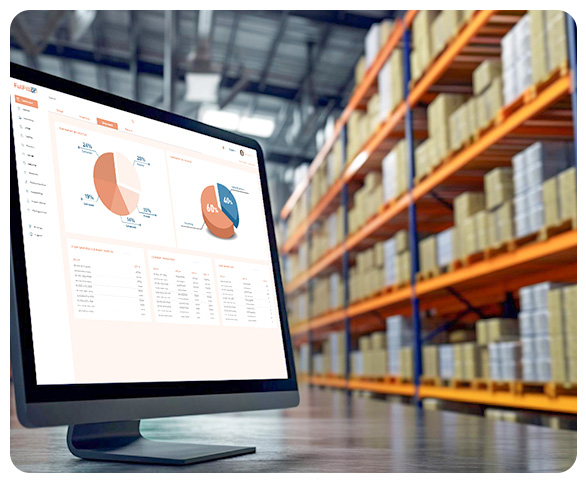
Real-Time 3PL Inventory Control Across Warehouses
Give warehouse teams a current view of available, allocated, received, transferred, and shipped stock so they can make faster replenishment, allocation, and fulfillment decisions across locations.
With real-time inventory visibility, 3PL operators can improve stock accuracy, simplify audits, support client reporting, and maintain product availability across every warehouse location.
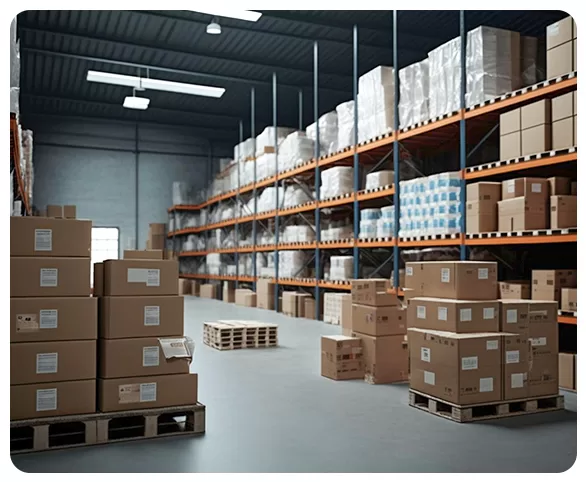
Scalable 3PL Inventory Management System
Prevent overstocking, reduce obsolete inventory, and maintain accurate stock levels with real-time inventory tracking. Automated inventory control workflows help 3PL providers minimize carrying costs while improving purchasing decisions with accurate, up-to-date data.
As your 3PL warehouse grows, your inventory management system should support more SKUs, client accounts, warehouse locations, bins, orders, and sales channels without slowing down fulfillment. A scalable 3PL inventory system helps maintain stock accuracy, operational visibility, and reliable warehouse performance as complexity increases.
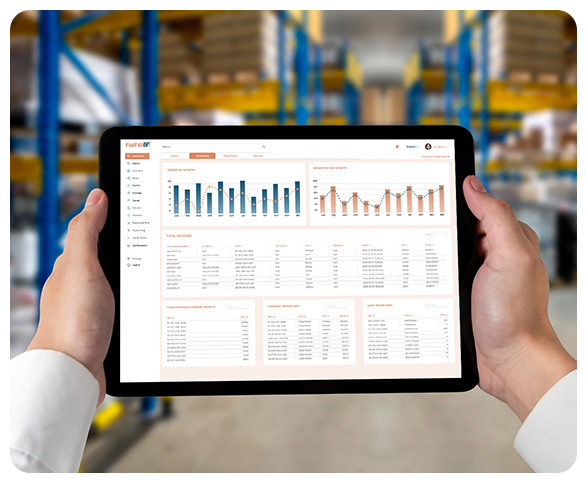
Inventory Reporting and Dashboards
Gain clear visibility into stock levels, SKU performance, and inventory movement across warehouses and client accounts. Generate accurate inventory reports to support purchasing decisions, client billing, audits, and operational forecasting.
Customizable dashboards and automated reports help 3PL providers identify slow-moving inventory, reduce carrying costs, and make data-driven decisions that improve overall warehouse performance.
Inventory Features That Keep Warehouse Data Accurate
Barcode Inventory System
Use barcode scanning to track receiving, putaway, picking, packing, stock transfers, and inventory movement with fewer manual errors and faster warehouse updates.
Run Cycle Counts Without Stopping Daily Warehouse Operations
Run scheduled or on-demand cycle counts to verify stock levels, reduce inventory discrepancies, and keep warehouse data accurate without shutting down daily fulfillment operations.
Track Lots, Expiry Dates, and Batches
Track batch numbers, lot codes, and expiry dates from receiving through dispatch to support traceability, reduce waste, and give clients accurate visibility into inventory movement.
Not ready for a demo yet? Compare plans or explore how Fulfillor fits your operation.
Improve Inventory Accuracy Across Your 3PL Warehouses
Learn More About Inventory Management
Guides on 3PL inventory control, warehouse operations, and stock accuracy.


Inventory Control Questions for 3PL Warehouses
Everything 3PLs and fulfillment centers need to know about managing inventory across multiple warehouses and clients.
3PL inventory management software helps third-party logistics providers track and manage inventory across multiple clients, warehouses, SKUs, bins, and sales channels from one system. It gives teams real-time visibility into stock levels, inventory movement, receiving, picking, shipping, returns, and adjustments.
A 3PL inventory management system should include real-time inventory tracking, multi-client inventory control, barcode scanning, bin and location management, batch and lot tracking, expiry tracking, ecommerce integrations, inventory reporting, cycle count support, and multi-warehouse visibility.
3PL inventory software helps prevent overselling by syncing stock updates across warehouses, ecommerce stores, marketplaces, and order channels in real time. When inventory changes after receiving, picking, shipping, returns, or adjustments, the system updates available stock to reduce mismatches.
Yes. Fulfillor helps 3PL providers manage inventory separately for multiple clients while operating from shared warehouses, bins, and fulfillment locations. Teams can track SKU-level stock, client-specific rules, order activity, and inventory movement from one system.
Yes. Fulfillor supports inventory visibility across multiple warehouse locations, bins, zones, and fulfillment centers. This helps 3PL teams monitor stock availability, transfer inventory, reduce discrepancies, and maintain accurate inventory data across locations.