Trusted by Growing Warehouses, Retailers, and Operations Teams

50+
Courier integrations
70+
Ecommerce integrations
200+
Active 3PL & fulfillment clients
100+
Retail businesses supported

When Do You Need a Cloud-Based WMS?

Many warehouses start with spreadsheets or basic inventory tools. As order volume, SKUs, or locations increase, these systems become difficult to manage and lead to errors.

  • Inventory discrepancies are slowing down daily operations.
  • Orders are delayed due to manual picking or packing steps.
  • Stock updates are not syncing across sales channels.
  • Warehouse teams rely on spreadsheets or disconnected tools.
  • Managers lack real-time visibility into inventory, orders, and performance.
  • Multiple warehouse locations are hard to monitor from one system.

A warehouse management system helps structure these operations and reduces errors as complexity increases.

What This Warehouse Management System Actually Handles

These are the core functions used daily inside a warehouse, not just feature checklists.

Inventory Management

Inventory Management

Track stock levels, SKU movement, warehouse locations, and real-time availability from one cloud-based system.

  • Monitor stock levels as items move through the warehouse
  • Support batch or lot tracking where required
  • Maintain accurate inventory across multiple storage locations
Order Fulfillment

Order Fulfillment

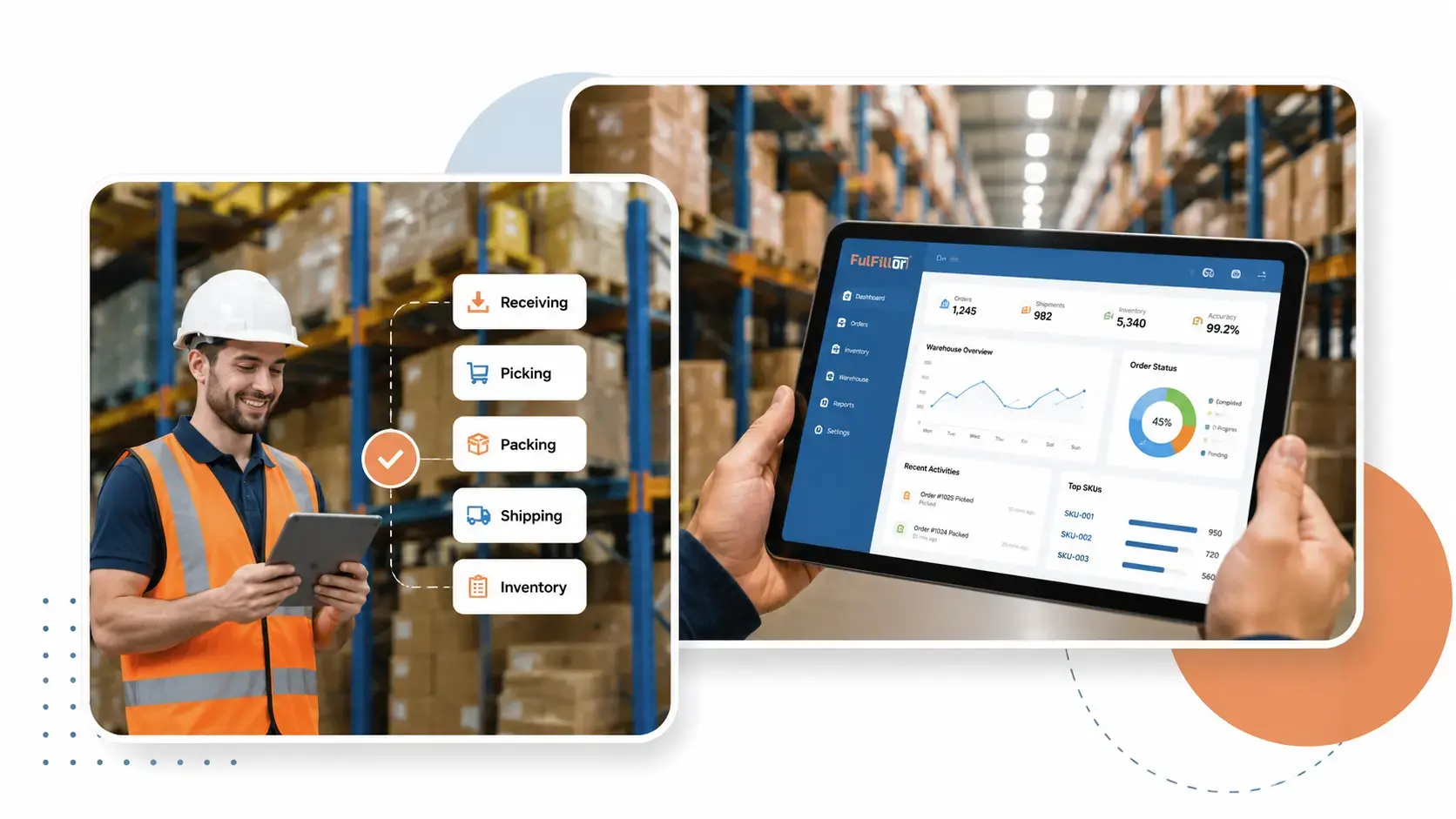
Manage picking, packing, shipping, and order status updates without relying on disconnected tools.

  • Assign picking tasks and validate items using barcode scans
  • Support batch and wave picking for higher volumes
  • Reduce errors during packing and dispatch
Warehouse Operations

Warehouse Operations

Organize receiving, putaway, storage, movement, cycle counts, and dispatch workflows.

  • Manage receiving, putaway, and internal transfers
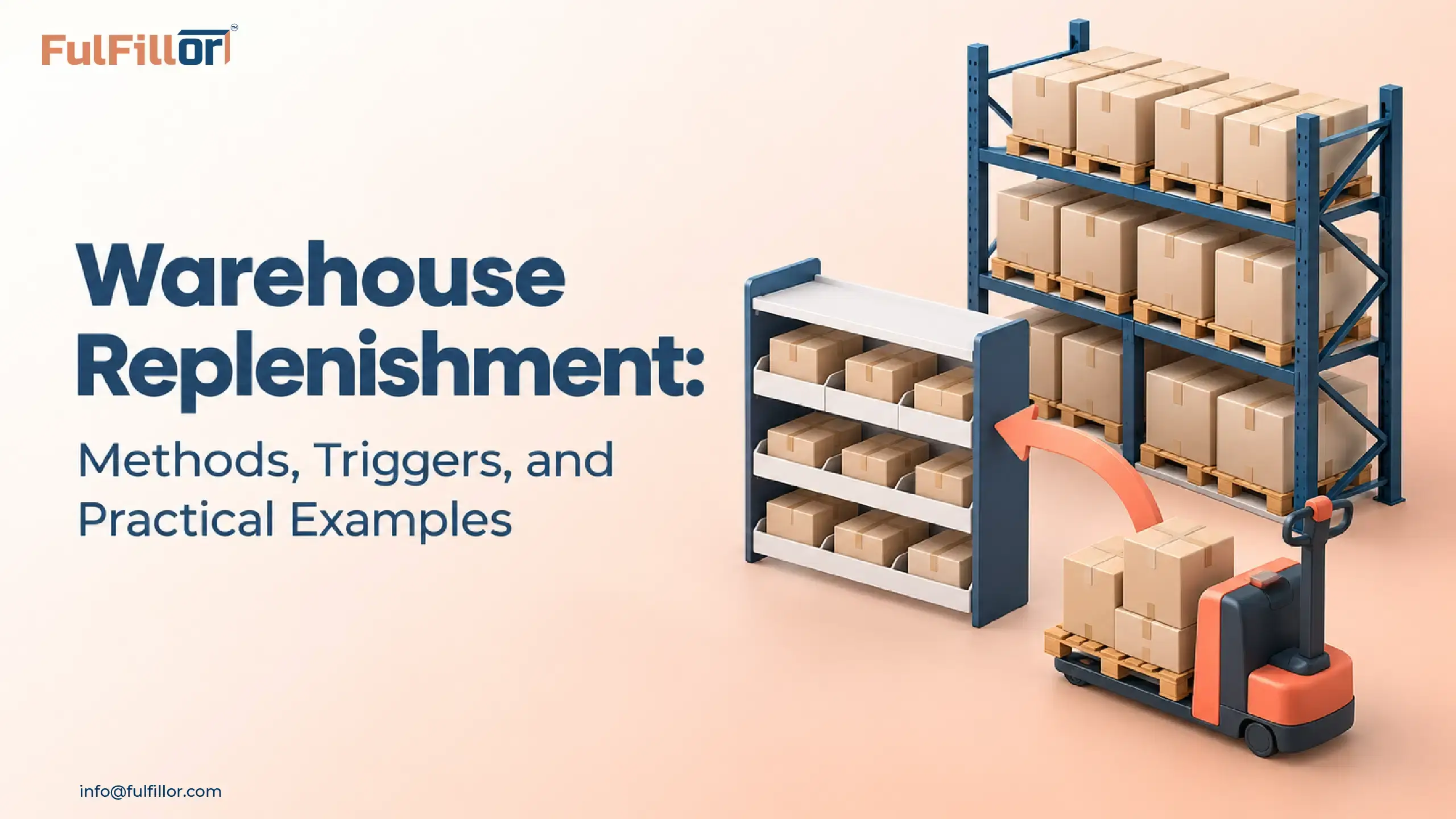
  • Set rules for storage locations and replenishment
  • Track movement of goods between zones and locations
Reporting and Integrations

Reporting and Integrations

Connect warehouse data with ecommerce platforms, carriers, and business systems for better operational visibility.

  • View real-time dashboards for inventory and order status
  • Generate reports based on operational data
  • Integrate with ecommerce platforms, ERP systems, and carriers

How Cloud WMS Supports Daily Warehouse Operations

Built for Growing Warehouse Operations: Manage higher order volume, more SKUs, and expanding warehouse activity without relying on manual spreadsheets or disconnected tools.

Better Use of Space and Labor: Give teams clearer task direction, improve stock placement, and reduce time spent searching for products.

Lower Costs Through Automation: Automate routine warehouse steps such as inventory updates, order routing, picking tasks, and reporting.

Clear Visibility and Compliance: Track warehouse activity, inventory movement, and order status from one system to support better control and accountability.

Fulfillor Cloud WMS Daily Operations

Reduce Manual Errors and Delays in Warehouse Operations

Use cloud-based warehouse software to improve inventory accuracy, speed up order processing, and give your team real-time visibility across daily operations.

Multi-Location Warehouse Inventory Management

Track Inventory Across Multiple Warehouses in Real Time

Centralized Control Across Locations: Track inventory and orders across warehouses from one system, without losing visibility or coordination.

Flexible Location Setup and Barcode Tracking: Define warehouse layouts, manage bins and pallets, and use barcode labeling to improve picking accuracy and traceability.

Update Inventory Automatically During Warehouse Operations

FIFO and Expiry-Based Inventory Control: Ensure older stock is picked first to reduce spoilage, write-offs, and compliance risks.

Batch, Lot, and Serial Tracking: Maintain full traceability from inbound to outbound, essential for regulated and high-value inventory.

Audit Trails and Inventory History: Track every inventory movement with detailed logs to support compliance and operational decisions.

Warehouse Inventory Tracking and Traceability
Advanced Warehouse Rules and Workflow Configuration

Set Rules for Storage, Movement, and Order Processing

Quality Control for Inbound and Outbound Operations: Catch errors early with configurable checks during receiving and dispatch to prevent downstream issues.

Flexible Inventory Handling Across Units and Dimensions: Manage inventory using multiple units of measure to support accurate storage, picking, and fulfillment.

Custom Workflows for Warehouse Operations: Configure workflows for receiving, put-away, and replenishment to maintain consistency as operations scale.

Learn More About Warehouse Operations

Explore practical guides on improving inventory accuracy, reducing picking errors, and optimizing warehouse workflows.

Read All Blogs
Warehouse Management Software: When Generic WMS Falls Short

Warehouse management software can look like the right answer...

Learn more
Best WMS Software for Small Businesses in the USA (3PL and eCommerce)

Choosing the best Warehouse Management System (WMS) in the U...

Learn more
How WMS Software Optimizes Warehouse Operations for 3PLs and eCommerce in the U.S.

Warehouse operations in the United States are under pressure...

Learn more

See How This WMS Works in Your Warehouse Setup

Get a personalized demo of Fulfillor’s cloud WMS to optimize inventory and orders.

Cloud WMS vs 3PL WMS: Which One Do You Need?

A cloud-based WMS helps warehouses manage inventory, orders, picking, packing, shipping, and real-time warehouse visibility without relying on locally installed software. A 3PL WMS is built for third-party logistics providers that manage multiple clients, client-specific rules, billing, SLAs, and fulfillment workflows.

Cloud WMS

Best for: Warehouses managing their own inventory and operations.

  • Real-time inventory visibility
  • Order picking, packing, and shipping workflows
  • Multi-location warehouse control
  • Ecommerce and carrier integrations

3PL WMS

Best for: Third-party logistics providers managing multiple clients.

  • Multi-client warehouse workflows
  • Client-specific rules and visibility
  • Automated billing and SLA support
  • Fulfillment operations across client accounts

If you manage your own warehouse operations, this cloud WMS page is the right starting point.

If you run a third-party logistics business, explore Fulfillor's dedicated 3PL WMS solution.

Frequently Asked Questions About Cloud-Based WMS

A cloud-based warehouse management system is software that helps warehouses manage inventory, orders, receiving, picking, packing, shipping, and reporting through an online platform instead of locally installed software.

Cloud WMS helps teams access real-time inventory data, reduce manual updates, improve order accuracy, and manage warehouse tasks from one centralized system.

Yes. A cloud WMS can help businesses monitor inventory, orders, and warehouse activity across multiple locations from a single dashboard.

Yes. Cloud WMS software can connect with ecommerce platforms, marketplaces, shipping carriers, and business systems to keep order and inventory data aligned.

Yes. Cloud-based WMS software is useful for growing warehouses because it can support higher order volume, more SKUs, additional users, and expanding warehouse locations without requiring local infrastructure.