
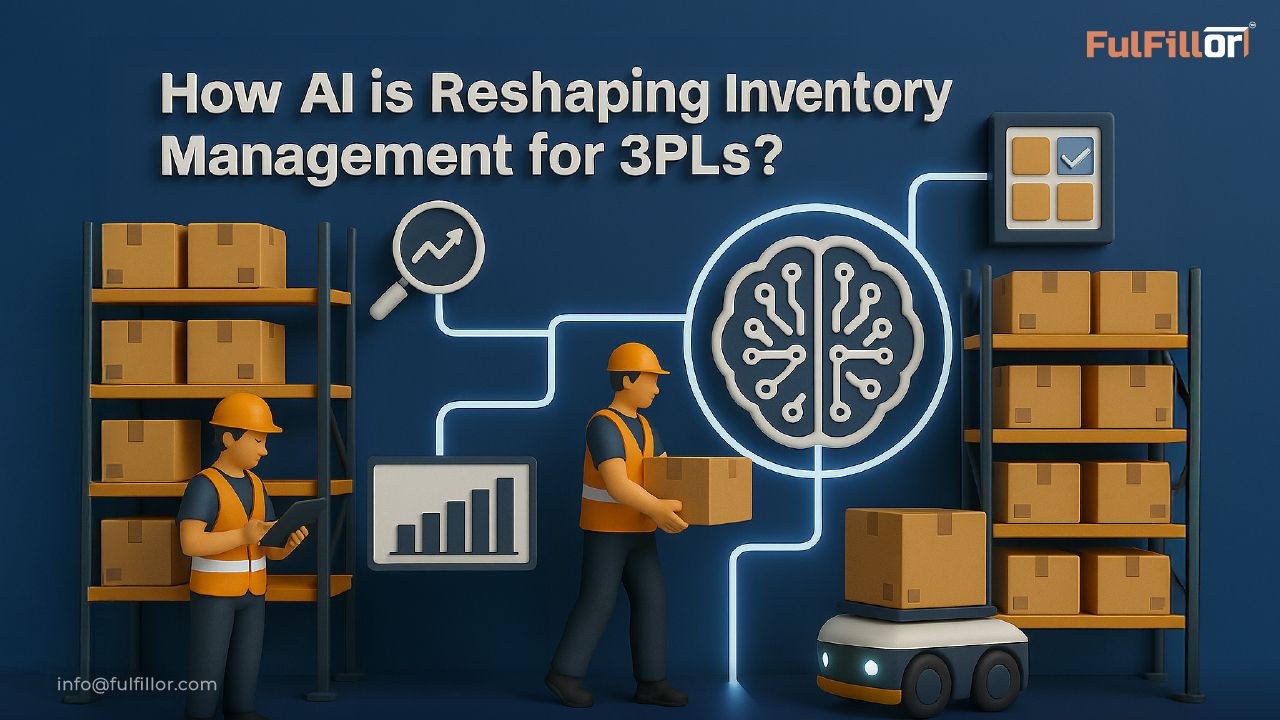
A 3PL may know exactly how much stock it holds without knowing how quickly that stock will move next month. Demand changes by client, product, sales channel, and promotion, making inventory planning difficult even when warehouse records are accurate.
AI inventory management can support those planning decisions by analyzing historical data and generating predictions or recommendations. Its usefulness depends on the task, the available data, and how the results are reviewed.
For a 3PL, there is another consideration: the warehouse may manage inventory without having authority to purchase more of it. This guide explains potential AI use cases, the information they require, and the controls needed when working across multiple client accounts.
What Is AI Inventory Management for 3PLs?
AI inventory management uses techniques such as machine learning to analyze inventory-related data and support predictions or recommendations. Depending on the application, this may involve estimating demand, identifying unusual transaction patterns, or helping planners prioritize replenishment.
It works alongside the systems that record warehouse activity. Barcode scans, stock balances, and order updates provide operational records; an AI model may analyze those records to support a particular decision. Whether a model is retrained, and how often, depends on the system and its maintenance process.
Where AI Can Support 3PL Inventory Decisions
The following are potential applications to evaluate. They are not a list of features included in every WMS or currently available in Fulfillor.
Demand Forecasting by Client and SKU
Forecasting models can use historical demand and relevant information, such as planned promotions, to estimate future demand. For a 3PL, those estimates may inform discussions about expected outbound volume, storage requirements, and replenishment needs.
Consider a client preparing for a promotion. The planner would need to review whether previous sales patterns reflect the upcoming offer and whether enough stock will be available. A forecast should support that discussion rather than become an automatic purchasing instruction.
Replenishment Planning
A planning tool may use expected demand, available stock, and lead times to recommend when inventory needs attention. The next action depends on the warehouse's responsibilities.
Moving stock from reserve storage to a picking location is different from ordering more stock from a supplier. A 3PL may control the first process while the client controls the second. Any recommendation should make that distinction clear and follow the agreed approval process.
Reviewing Unusual Inventory Activity
Where supported, anomaly detection can help prioritize transactions that differ from established patterns. For example, a sudden increase in adjustments for one client and SKU could be flagged for investigation.
A warehouse supervisor would still need to examine the underlying records. The cause might be damaged goods, a unit-of-measure error, a counting correction, or another operational issue. An alert is a reason to investigate, not proof that inventory is missing.
What Data Does AI Inventory Management Need?
Start with the decision the tool is expected to support. Demand forecasting needs different inputs from reviewing unusual inventory adjustments. Collecting more data is useful only when it is relevant, reliable, and permitted for that purpose.
For a forecasting project, review historical demand, client and SKU identifiers, units of measure, stock availability, and known promotional events. Where the task involves replenishment, lead times and expected receipts may also matter.
Warehouse shipment history needs careful interpretation. Low shipments during a stockout do not necessarily mean customers wanted fewer units. New products, missing records, and changes in client activity can also make historical patterns less representative.
Before testing a model, resolve inconsistent identifiers and document where each input comes from. Keep client ownership attached to the records throughout the process.
How to Evaluate Results and Maintain Control
Test the tool against the process your team already uses. For forecasting, compare predictions with actual demand over a defined period and check whether they improve on a simple baseline. Review results by client and product group so an overall average does not hide poor performance.
For alerts, track how many lead to useful investigations and how many create unnecessary work. For replenishment recommendations, review whether they reduce shortages without creating excessive movements or stock.
Human approval remains important when a recommendation changes purchasing, allocation, or a client's agreed service. Define who can approve the action, what information they should review, and how the decision is recorded.
Client Data and Access Controls
Ask which client records the tool uses, whether data is shared with external services, and whether it is retained or used for model training. Confirm that access and outputs respect client permissions and contractual requirements.
When AI May Add Little Value
An operation with limited history, unreliable stock records, or straightforward requirements may benefit more from better data capture and clearly configured rules. Evaluate AI against the actual problem and its operating costs before expanding its use.
Where to Start
Choose one inventory decision that your team struggles to make consistently. Establish a baseline, check the available data, and test whether the proposed tool improves the result without creating excessive review work.
Fulfillor provides tools for multi-client inventory and warehouse operations. Schedule a demo to discuss your requirements and confirm which capabilities are available, which need configuration, and which may require an additional integration.
To explore Fulfillor’s approach to AI warehouse management, review the product page, then schedule a demo to confirm which capabilities are available for your operation and whether additional configuration or integrations are needed.