
Pick and pack fulfillment is a critical stage in the e-commerce order fulfillment process. When products are picked from inventory and packed for shipping, even small errors can lead to wrong orders, delayed deliveries, returns, and poor customer experiences. For e-commerce brands, 3PL warehouses, and fulfillment centers, improving this process directly affects order accuracy, warehouse efficiency, and fulfillment speed.
As order volumes increase, many warehouses struggle with manual picking, inventory mismatches, inefficient packing workflows, and slow order processing. These issues often create bigger fulfillment problems than the shipping stage itself. A well-structured pick and pack fulfillment system helps warehouse teams reduce picking errors, improve packing accuracy, manage real-time inventory, and process more orders without adding unnecessary labor costs.
For 3PL operators and e-commerce fulfillment teams, improving pick and pack operations often starts with better inventory visibility, barcode-based picking, and structured warehouse management workflows. This guide explains what pick and pack fulfillment means, how it works, why it matters, and how warehouses can reduce common picking and packing challenges as order volume grows.
According to Zebra’s Warehousing Vision Study, warehouse operators are accelerating investments in automation, barcode scanning, and warehouse technologies to improve order accuracy, productivity, and operational efficiency.
What Is Pick and Pack Fulfillment and Why It Matters in 2026
Pick and pack fulfillment is the process of selecting the right products from warehouse inventory and packing them properly for shipment to the customer. It is a key stage in the e-commerce order fulfillment process and plays a major role in order accuracy, shipping speed, warehouse efficiency, and customer satisfaction.
Unlike bulk shipping, pick and pack operations handle individual customer orders or small batches of orders. This makes the process especially important for e-commerce brands, 3PL warehouses, and fulfillment centers that manage high order volumes across multiple sales channels.
A well-structured pick and pack fulfillment workflow helps warehouse teams reduce picking errors, avoid packing mistakes, improve real-time inventory accuracy, and streamline the overall order fulfillment process.
How Does Pick and Pack Fulfillment Work?
Pick and pack fulfillment follows a structured workflow that helps warehouses process customer orders accurately and efficiently. Here’s how the process usually works:
- Order received: A customer places an order through an e-commerce website, marketplace, or sales channel, and the order details are sent to the warehouse or WMS.
- Inventory checked and allocated: The system verifies product availability and reserves the required items for that specific order.
- Picking: Warehouse staff use a pick list, barcode scanner, or mobile WMS device to locate and collect the correct SKUs from storage locations.
- Order verification: Picked items are scanned and checked against the order details to reduce picking errors and prevent wrong-item shipments.
- Packing: The order is packed in the right box, mailer, or packaging material based on product size, weight, fragility, and shipping requirements.
- Labeling and shipping: A shipping label is generated, tracking details are updated, and the package is handed off to the carrier for delivery.
Common Pick and Pack Methods Used in Warehouses
Different warehouses use different picking methods depending on order volume, SKU count, warehouse layout, and fulfillment complexity. The right method can reduce travel time, improve picking accuracy, and help teams process more orders per hour.
1. Piece Picking
Piece picking is when a warehouse worker picks items for one order at a time. This method is simple and easy to manage, but it can become slow as order volume increases.
2. Batch Picking
Batch picking allows workers to pick items for multiple orders at the same time. This reduces repeated walking and improves efficiency for warehouses that process many similar orders.
3. Zone Picking
Zone picking divides the warehouse into different areas, with each picker assigned to a specific zone. This method works well for larger warehouses with high SKU counts and multiple product categories.
4. Wave Picking
Wave picking combines batch and zone picking. Orders are grouped and picked during scheduled waves based on shipping deadlines, carrier pickup times, or order priority.
5. Cluster Picking
Cluster picking allows workers to pick multiple orders into separate totes or carts during one picking route. This helps improve productivity while keeping orders organized.
Why Pick and Pack Fulfillment Is More Important Than Ever
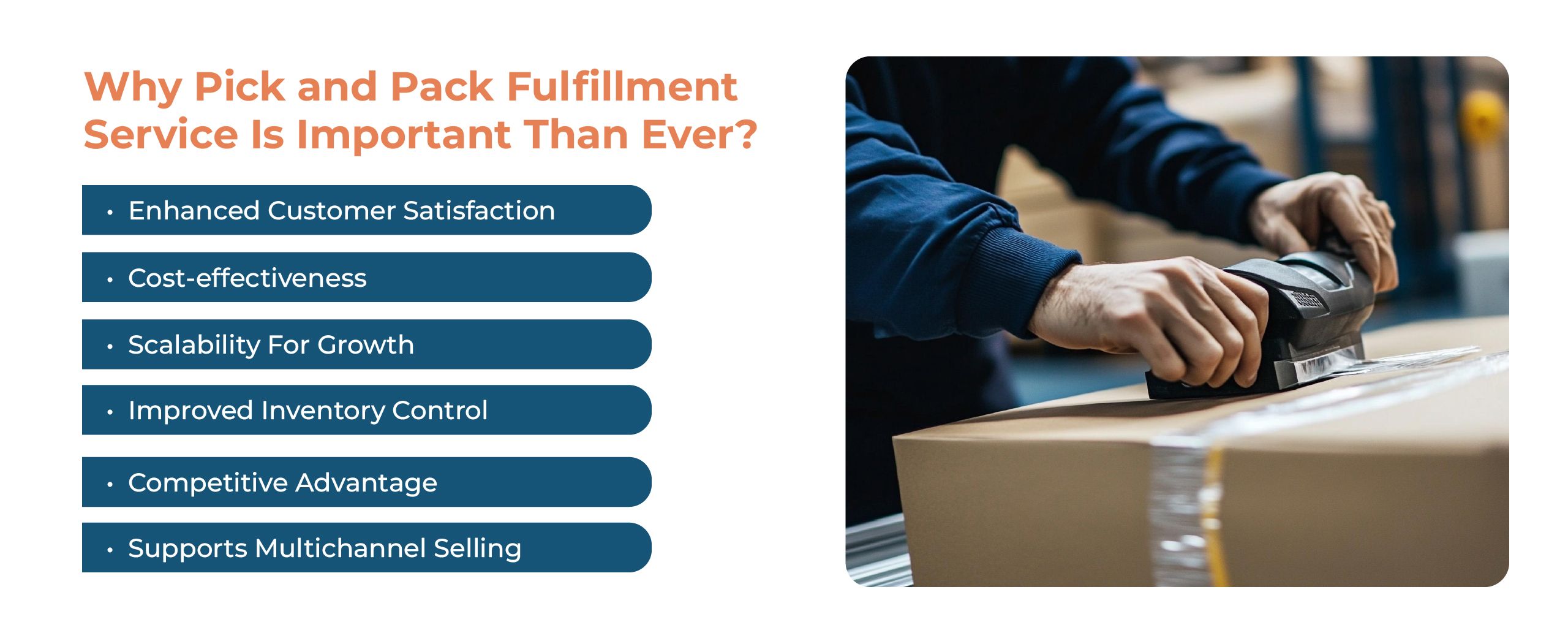
Here’s why an efficient pick and pack fulfillment process matters for growing e-commerce brands, 3PL warehouses, and fulfillment centers:
1. Improves Order Accuracy and Customer Satisfaction
Customers expect fast, accurate deliveries. A reliable pick and pack fulfillment system helps ensure the right products are picked, packed, and shipped on time. When orders arrive correctly and without damage, businesses reduce returns, improve customer satisfaction, and build stronger repeat purchase behavior.
2. Reduces Fulfillment Costs
Every picking mistake, packing error, or damaged shipment creates extra costs through returns, reshipping, replacement products, and customer support time. An efficient pick and pack process helps reduce these avoidable expenses by improving order accuracy, packing consistency, and warehouse productivity.
3. Supports Scalable Warehouse Growth
Manual picking and packing workflows often become inefficient as order volume increases. With automation, barcode scanning, and an optimized WMS, warehouses can process more orders without depending only on additional labor or storage space. This makes scaling easier for e-commerce fulfillment and 3PL operations.
4. Improves Real-Time Inventory Control
Every picked item affects inventory accuracy. A structured pick and pack workflow with real-time inventory updates helps warehouse teams avoid stock mismatches, overselling, backorders, and repeated manual checks. This gives fulfillment teams better visibility into available stock and supports more accurate purchasing and replenishment decisions.
5. Creates a Competitive Advantage
Fast and accurate fulfillment can separate a business from competitors. When a warehouse can pick, pack, and ship orders quickly with fewer errors, customers receive a better delivery experience. For e-commerce brands and 3PL providers, reliable pick and pack logistics can improve retention, reviews, and overall brand trust.
6. Supports Multichannel Order Fulfillment
Selling through Shopify, Amazon, Walmart, WooCommerce, or other marketplaces can make fulfillment more complex. A strong pick and pack system helps centralize orders from multiple sales channels, reduce workflow confusion, and keep shipments moving on time. This is especially important for 3PL warehouses managing orders for multiple clients across different platforms.
Common Pick and Pack Fulfillment Challenges for 3PL Warehouses
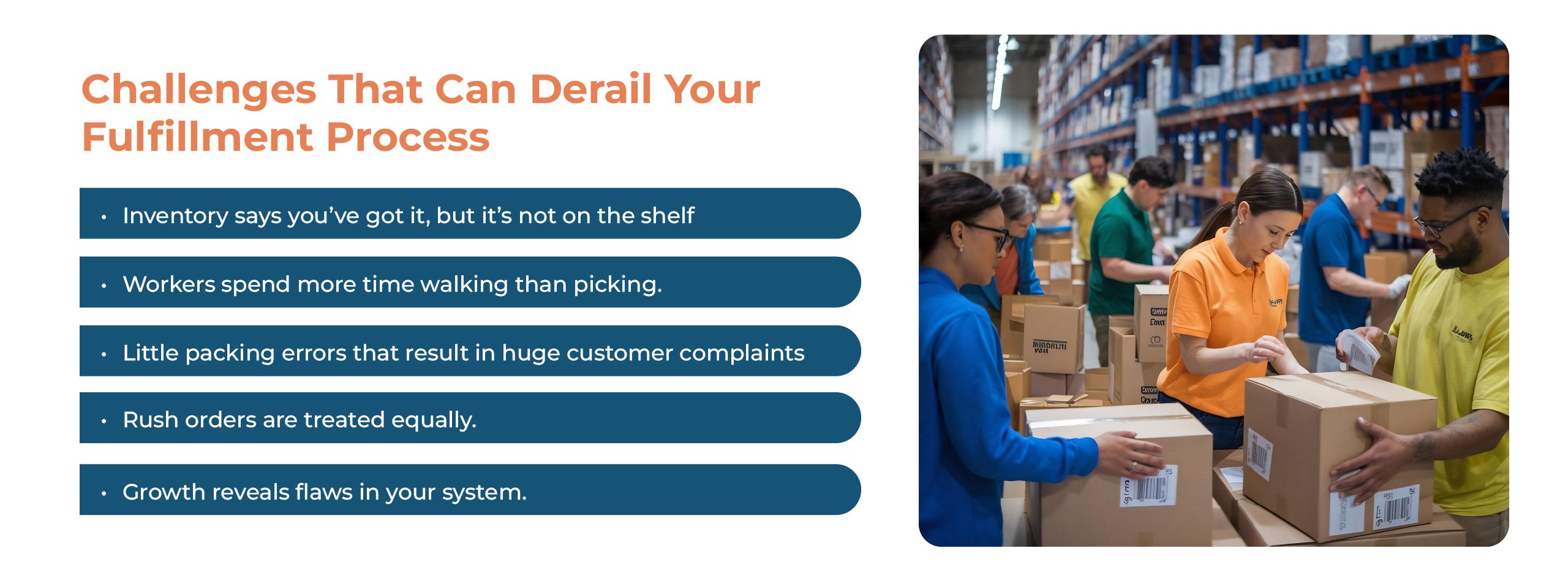
The benefits of an efficient pick and pack fulfillment system are clear, but many warehouses still face operational challenges that slow down order processing, reduce accuracy, and increase fulfillment costs. Here are the most common pick and pack challenges for e-commerce brands, 3PL warehouses, and fulfillment centers:
1. Inventory Mismatches
One of the biggest fulfillment challenges happens when the system shows available stock, but the product is missing from the shelf. Without real-time inventory updates, warehouse teams may face mis-picks, delayed shipments, backorders, and customer complaints. Accurate inventory visibility is essential for maintaining order accuracy and keeping the pick and pack process moving smoothly.
2. Inefficient Warehouse Layout
When pickers spend more time walking than picking, fulfillment speed drops. A poorly planned warehouse layout, weak SKU placement, or inefficient pick path can increase travel time and slow down order processing. This becomes especially costly during peak seasons, when warehouses need to process high order volumes quickly and accurately.
3. Packing Errors
Small packing mistakes can create major fulfillment problems. Sending the wrong size, color, quantity, or packaging material can lead to returns, reshipping costs, damaged products, and negative customer experiences. A structured packing workflow with order verification helps reduce packing errors and protect customer trust.
4. Poor Order Prioritization
Not every order should be handled the same way. Rush orders, same-day shipping requests, marketplace orders, and priority client orders often require faster processing. Without clear order prioritization rules in the warehouse management system, high-priority shipments may be delayed or missed.
5. Manual Workflows That Cannot Scale
A manual pick and pack process may work for low order volumes, but it often breaks down as the business grows. As daily orders increase, spreadsheets, paper pick lists, and disconnected systems create delays, errors, and unnecessary labor pressure. To scale efficiently, warehouses need barcode scanning, automated workflows, real-time inventory control, and WMS-driven pick and pack operations.
A Real-World Pick and Pack Transformation with Fulfillor
A growing US fashion e-commerce brand was manually processing 200+ daily orders using spreadsheets, printed invoices, and visual SKU matching. As order volume increased, the team faced slower picking, inventory mismatches, and more fulfillment errors.
After switching to Fulfillor WMS, the brand reduced pick times by 35%, improved order accuracy, and expanded into two new regions without adding warehouse staff. With barcode-based picking, real-time inventory tracking, and automated order workflows, Fulfillor helped the team scale pick and pack fulfillment with fewer manual errors.
Pick and Pack KPIs Every 3PL Warehouse Should Track
To improve pick and pack fulfillment, warehouses should track key performance metrics such as pick accuracy rate, average pick time, packing error rate, order cycle time, inventory accuracy, and fulfillment cost per order. These KPIs help teams identify workflow issues, reduce manual errors, and improve overall warehouse productivity.
How a 3PL WMS Improves Pick and Pack Operations
A modern 3PL WMS helps warehouses manage pick and pack fulfillment with better accuracy, speed, and visibility. Instead of relying on manual lists, spreadsheets, or disconnected systems, warehouse teams can use barcode scanning, real-time inventory updates, order prioritization, and automated workflows to reduce errors and process orders more efficiently.
For 3PL providers, this is especially important because each client may have different order rules, packaging needs, billing structures, and shipping requirements. A centralized warehouse management system helps teams manage these workflows without slowing down daily fulfillment operations.
With the right WMS, warehouses can improve pick accuracy, reduce packing mistakes, track inventory in real time, and scale order volume without adding unnecessary labor. This makes pick and pack operations more reliable for both fulfillment teams and the e-commerce brands they support.
Book a free tailored demo to see how smarter pick and pack workflows can support your 3PL operations.