

Warehouse operations in the United States are under pressure from rising order volumes, faster delivery expectations, labor constraints, and inventory accuracy issues. For 3PL providers, eCommerce brands, and distributors, even small warehouse errors can delay fulfillment and increase operating costs.
Warehouse management software helps teams manage inventory, orders, picking, packing, shipping, and reporting from one connected system. In this guide, we’ll explain how it works, where it improves daily warehouse workflows, and why fulfillment teams use it to scale operations with fewer errors.
What Is Warehouse Management Software?
A Warehouse Management System (WMS) helps warehouse teams track inventory, manage orders, guide picking and packing, coordinate shipping, and monitor daily fulfillment activity from one connected system.
For U.S. 3PLs and eCommerce warehouses, this is especially important when handling high order volumes, multi-client inventory, domestic carrier handoffs, and fast delivery expectations.
Who This Guide Is For
This guide is useful for 3PL providers, eCommerce fulfillment teams, distributors, and warehouse operators that need better control over inventory accuracy, order fulfillment, labor productivity, and shipping workflows.
How Warehouse Software Improves Fulfillment Workflows
Inventory management helps U.S. 3PLs and eCommerce warehouses track stock levels, monitor item movement, and reduce stockouts or overstocking. When paired with demand forecasting, warehouse teams can plan replenishment more accurately and avoid inventory gaps during peak order periods.
Real-time stock visibility helps warehouse managers plan purchasing, storage, and fulfillment with fewer blind spots. The platform also supports order processing, picking, packing, and warehouse coordination, helping teams ship orders faster and with fewer errors.
Slotting tools help warehouses place products based on demand, size, weight, and picking frequency. This improves storage capacity, reduces travel time, and helps teams process orders faster.
Better space utilization allows U.S. warehouses to store more inventory, reduce unnecessary handling, and improve labor productivity.
Warehouse software can also improve shipping by automating carrier selection, label generation, and shipping documentation. When integrated with a transportation management system (TMS), it gives teams better visibility from warehouse release to final delivery.
In a typical fulfillment workflow, warehouse software connects receiving, putaway, inventory updates, order allocation, picking, packing, shipping, and reporting. This helps teams reduce disconnected processes and keep order data accurate from inbound stock movement to final delivery.
Why 3PL Providers Need Warehouse Management Software
Warehouse management software helps 3PL providers manage multiple clients, inventory rules, order workflows, and shipping requirements from one system.
For U.S. 3PLs, the platform can support client-specific inventory tracking, order routing, picking, packing, shipping, and reporting across high-volume fulfillment operations.
-
Inventory Management: Track stock by client, SKU, location, lot, or warehouse zone while reducing shortages and overstocking.
-
Order Management: Manage incoming orders, prioritize fulfillment, reduce processing errors, and support on-time delivery.
-
Picking and Packing: Guide pick routes, packing steps, and order verification to reduce labor time and fulfillment errors.
-
Tracking and Shipping: Automate label generation, carrier coordination, and tracking updates so teams can ship orders with better visibility.
Key Features Modern 3PL Warehouses Need
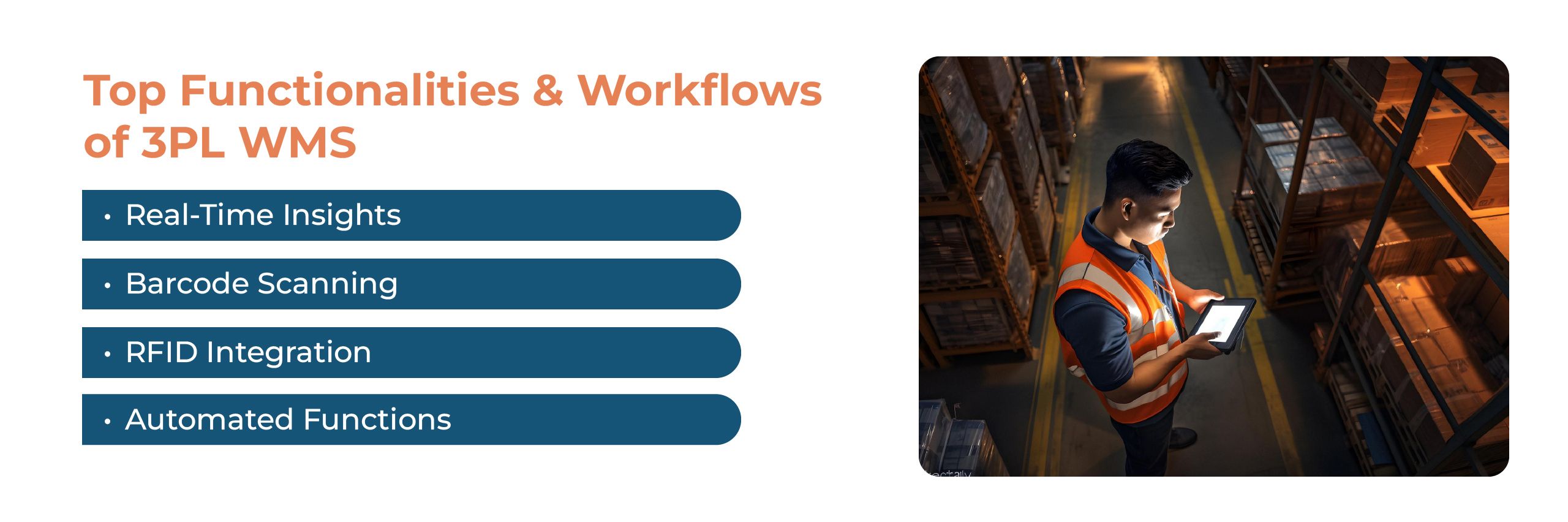
Modern warehouse software supports daily 3PL workflows by improving inventory visibility, order accuracy, picking efficiency, and shipment control.
-
Real-Time Inventory Updates: Track inventory, orders, and shipments as activity happens across the warehouse.
-
Barcode Scanning: Reduce manual entry, verify item movement, and improve picking, packing, and receiving accuracy.
-
RFID Integration: Identify and track inventory faster across receiving, storage, transfers, and outbound fulfillment.
-
Workflow Automation: Automate cycle counting, order allocation, replenishment, and shipment updates to reduce delays and manual errors.
Benefits of Warehouse Management Software
-
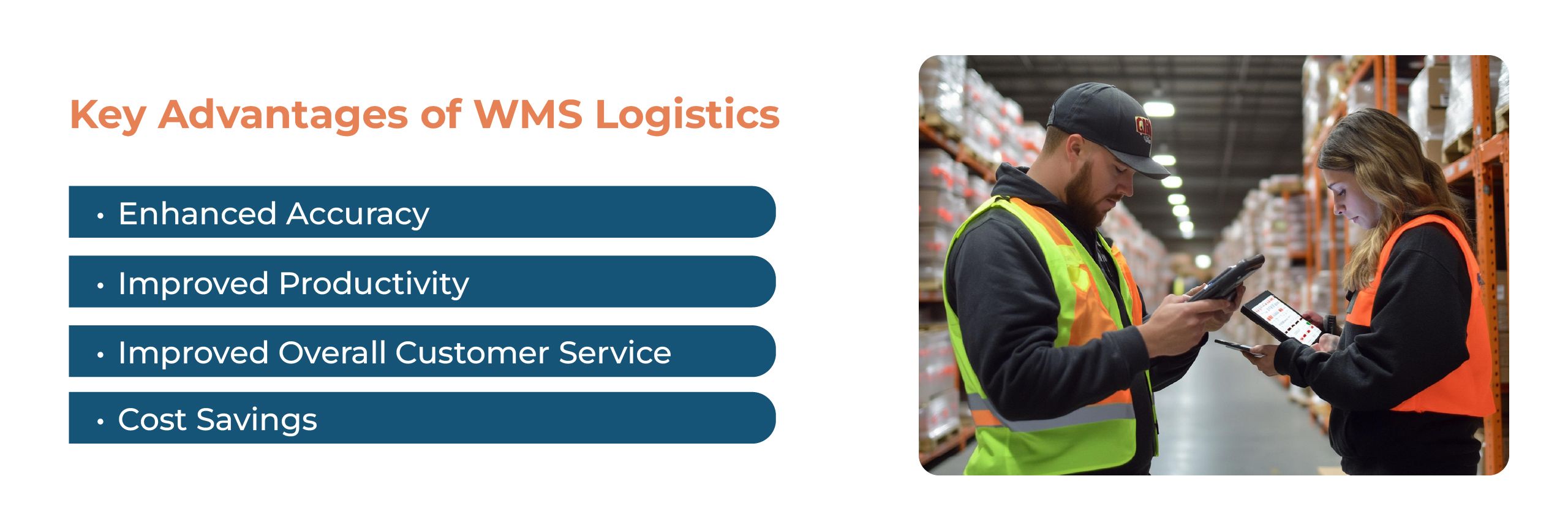
Improved Inventory Accuracy: Barcode scanning, real-time stock updates, and reconciliation tools help teams reduce stock discrepancies, prevent stockouts, and avoid fulfillment errors.
-
Higher Warehouse Productivity: Automated picking, packing, order allocation, and replenishment help warehouse teams process more orders with fewer delays.
-
Faster Fulfillment: Real-time inventory visibility and order routing help U.S. 3PLs and eCommerce warehouses ship orders faster and reduce fulfillment mistakes.
-
Lower Operating Costs: Better space utilization, labor planning, and inventory control help reduce unnecessary handling, rework, and fulfillment delays.
Together, these improvements help U.S. warehouse teams handle higher order volumes without adding unnecessary complexity. Common warehouse KPIs improved by warehouse management software include inventory accuracy, order cycle time, picking accuracy, order fulfillment rate, dock-to-stock time, labor productivity, and shipping error rate.
Challenges Warehouses Face Without Modern Management Software
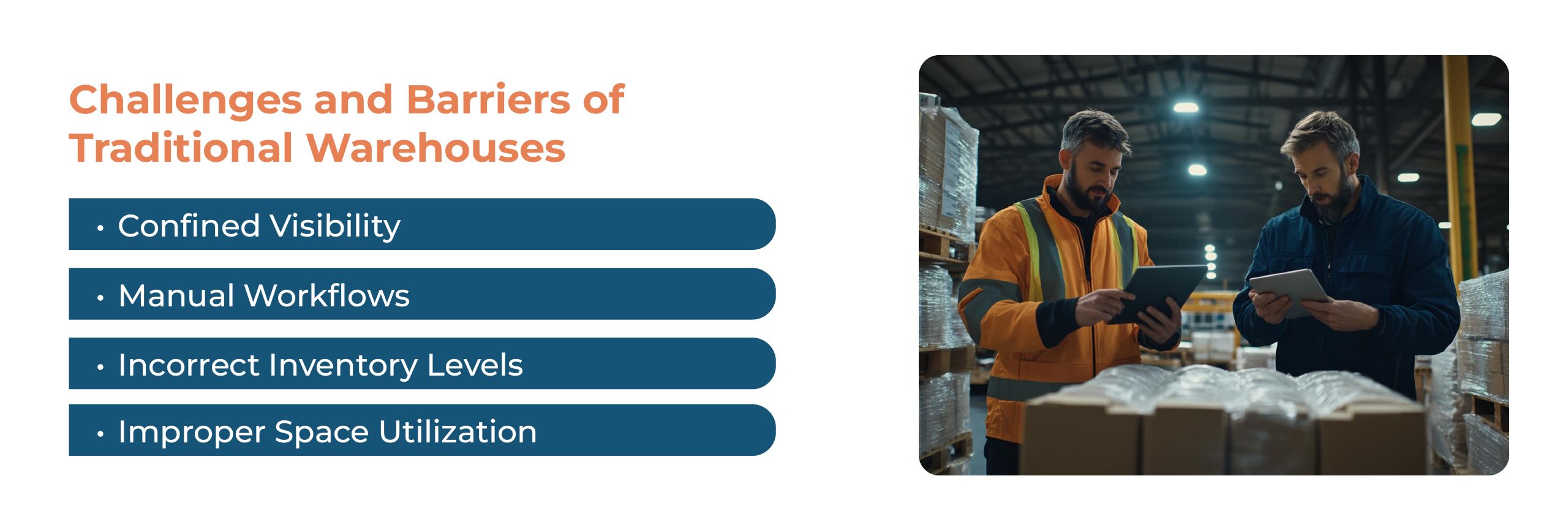
Warehouses that rely on spreadsheets, paper records, or disconnected systems often struggle to maintain accurate inventory and fast fulfillment. For U.S. 3PLs and eCommerce warehouses, these issues can become more serious during peak order periods or multi-client operations.
-
Limited Inventory Visibility: Teams may not have accurate stock data across locations, bins, or client accounts, which can delay order fulfillment.
-
Manual Workflows: Paper-based processes and manual data entry increase the risk of picking errors, inventory mistakes, and slower warehouse activity.
-
Incorrect Stock Levels: Without real-time updates, warehouses may experience stockouts, overstocking, misplaced inventory, or inaccurate replenishment planning.
-
Poor Space Utilization: Inefficient slotting and storage practices can waste space, increase travel time, and slow down picking and packing.
Example: How a 3PL Warehouse Uses Management Software
A 3PL warehouse receiving a new shipment can scan items at the dock, assign them to storage locations, update stock counts, and make inventory available for order allocation. When an order comes in, the system can guide the picker to the right bin, verify the item with barcode scanning, generate packing steps, and send shipping details to the carrier system.
This reduces manual handoffs between receiving, inventory, order fulfillment, and shipping teams.
Why U.S. 3PLs Choose Fulfillor for Warehouse Management
Fulfillor helps 3PL providers manage inventory, orders, picking, packing, shipping, reporting, and client workflows from one connected platform.
For U.S.-based 3PLs and distributors, this supports high-volume fulfillment, multi-client inventory control, faster order processing, and better visibility across warehouse locations.
The platform helps teams manage workflows from inbound receiving to final shipment, including stock updates, order allocation, barcode scanning, shipping coordination, and operational reporting.
If you're evaluating warehouse management software for your 3PL or distribution operation, schedule a demo to see how Fulfillor supports scalable U.S. fulfillment.
FAQs
How does warehouse management software improve inventory accuracy?
It improves inventory accuracy by using barcode scanning, real-time stock updates, cycle counting, and automated reconciliation to reduce manual errors and stock discrepancies.
Why do 3PL providers use warehouse management software?
3PL providers use warehouse management software to manage multiple clients, SKUs, orders, billing rules, shipping workflows, and reporting requirements across shared warehouse operations.
Can warehouse management software support eCommerce fulfillment?
Yes. Warehouse management software can support eCommerce fulfillment by syncing inventory, processing orders, guiding picking and packing, generating shipping labels, and updating fulfillment status.
Does warehouse management software integrate with shipping tools?
Many warehouse management platforms integrate with shipping tools, carrier systems, eCommerce platforms, ERP systems, and transportation management systems to keep fulfillment workflows connected.